Brushed vs Brushless RC Motors: What’s the Difference?
September 29, 2026 · Random Recon
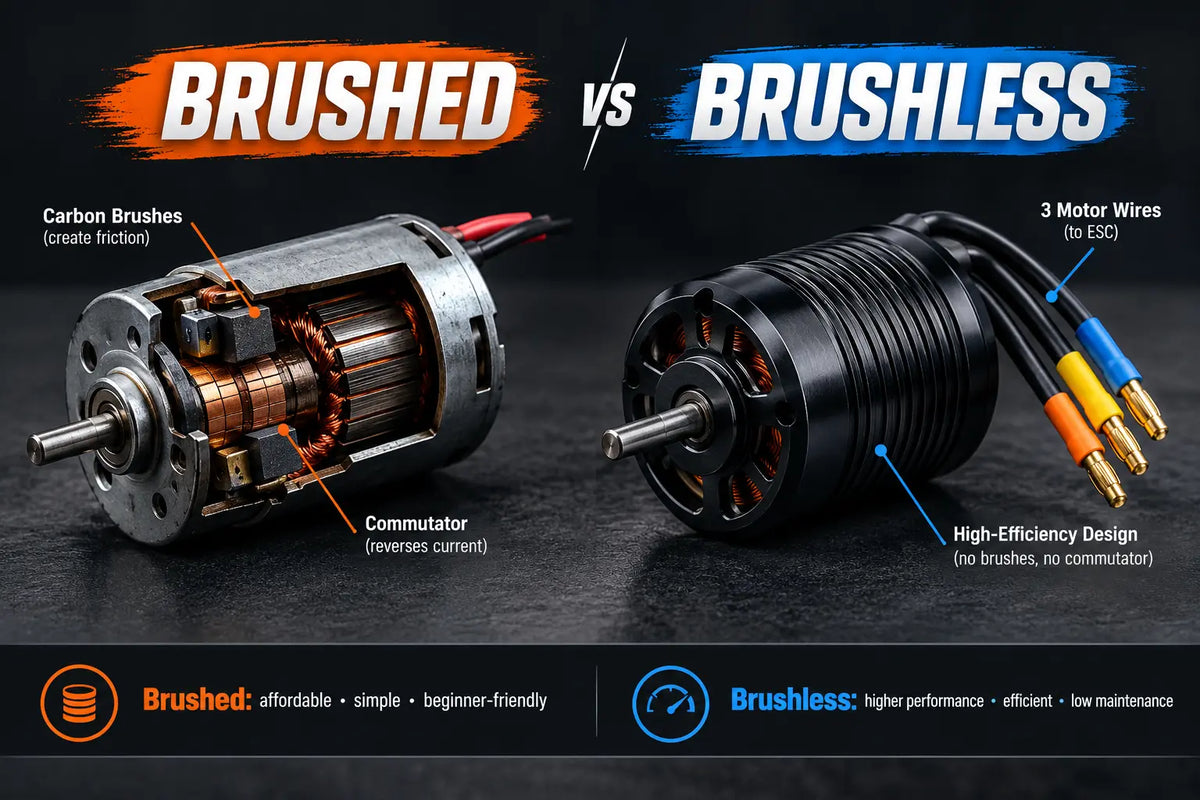
Brushed vs Brushless RC Motors: What’s the Difference?
Understand the key differences between brushed and brushless RC motors, including how they work, maintenance, efficiency, speed potential, driving style, and beginner-friendly setups. carbon brushes,permanent magnets
When choosing an RC car, one of the most important specifications you'll come across is the motor type. RC cars typically use either a brushed motor or a brushless motor, and each has different characteristics.
Understanding the difference can help you choose an RC car that matches your driving style, performance expectations, and experience level.
What Is a Brushed RC Motor?
A brushed motor is a traditional electric motor design that uses physical brushes, carbon brushes, and a commutator to transfer electrical current to the rotating part of the motor through physical contact.
Brushed motors have been used in RC vehicles for many years and remain common in entry-level and recreational RC cars.
Advantages of Brushed RC Motors
- A straightforward RC setup
- Lower-cost vehicles
- Casual recreational driving
- Beginner-friendly RC cars
- Easy-to-understand systems
Limitations of Brushed Motors
The physical brushes and commutator create friction during operation. Over time, these components can wear, which means brushed motors may require more maintenance than brushless systems.
Performance also varies significantly depending on the motor, ESC, battery, gearing, and vehicle design.
What Is a Brushless RC Motor?
A brushless motor eliminates the physical brushes and commutator used in a traditional brushed motor. Instead, electronic speed control is used to manage the motor’s operation.
Brushless systems are commonly found in higher-performance RC cars.
They’re especially common in performance-oriented vehicles such as high-speed RC cars, racing models, buggies, monster trucks, rock crawlers, rally cars, and other hobby-grade vehicles.
Advantages of Brushless RC Motors
Depending on the complete vehicle setup, brushless systems can provide:
- Strong acceleration
- Higher potential speeds
- Efficient operation
- Reduced mechanical wear inside the motor
- Performance-focused driving
- Less routine brush-related maintenance
Brushless vs Brushed RC Motors
| Feature | Brushed | Brushless |
|---|---|---|
| Motor design | Uses brushes, carbon brushes, and a commutator | No physical brushes; uses electronic control |
| Maintenance | Brushes can wear | Less brush-related maintenance |
| Typical use | Entry-level and recreational | Performance and hobby-grade |
| Speed potential | Varies by setup | Often higher in performance setups |
| Efficiency | Generally lower | Generally higher |
| Complexity | Simpler | More advanced |
| Cost | Often more affordable | Often more expensive |
| Best suited for | Casual driving and beginners | Performance-focused driving |
Is Brushless Better Than Brushed?
The answer depends on how you plan to use your RC car.
Choose Brushed
Brushed systems can make sense if you want:
- A simple setup
- Affordable RC driving
- Casual recreational use
- A beginner-friendly vehicle
Choose Brushless
Brushless systems can make sense if you want:
- Performance-focused driving
- Strong acceleration
- Higher potential speed
- Less brush-related motor maintenance
Brushless RC Cars for High-Speed Driving
Brushless motors are particularly common in high-speed RC cars. A brushless system paired with an appropriate battery, ESC, drivetrain, and gearing can deliver strong acceleration and impressive speed.
Looking for More Speed?
If you're interested in racing, speed runs, or performance-oriented outdoor driving, explore the Random Recon RC high-speed RC car collection.
Explore High-Speed RC Cars →Brushed RC Cars for Beginners
For first-time hobbyists, brushed can be a straightforward starting point. They can provide an opportunity to learn throttle control, steering, cornering, braking, and general RC driving.
As experience grows, drivers can explore advanced brushless models and hobby-grade equipment.
Does Brushless Mean Faster?
Not necessarily. The motor alone does not determine the top speed of an RC car.
Which Motor Should You Choose?
Brushed RC Motor
- Simpler setup
- Casual RC driving
- Potentially lower-cost entry
- Beginner-friendly vehicle
Brushless RC Motor
- Higher-performance driving
- Strong acceleration
- Higher potential speed
- Less brush-related motor maintenance
- Performance-focused RC experience
Both Motor Types Have a Place in RC
Both brushed and brushless motors have a place in the RC hobby. Brushed motors can be excellent for starting, while brushless systems can provide the performance and acceleration many experienced enthusiasts want.
The right choice ultimately depends on how you plan to drive. Consider your experience level, desired performance, budget, and the type of RC driving you enjoy before choosing your next vehicle.
Frequently Asked Questions
Is brushed or brushless better for RC?
Is brushless really better than brushed?
What are the downsides of a brushless motor?
How long does a brushed RC motor last?
Do brushed RC motors wear out?
Do brushless RC motors need maintenance?
Which RC motor is better for beginners?
Which motor is best for high-speed RC cars?
Can I upgrade a brushed RC car to brushless?
Find Your Next RC Car at Random Recon RC
Whether you're looking for beginner-friendly driving, high-speed performance, rock crawling, monster trucks, drifting, trucks, or off-road buggies, explore the RC lineup at Random Recon RC and choose a vehicle that matches the way you want to drive.